
Corporate Air Ticket Booking Inside Your Travel Policy
How to bring business flight bookings inside your travel policy: where bookings leak, what the policy should say, and how request and ticket connect.
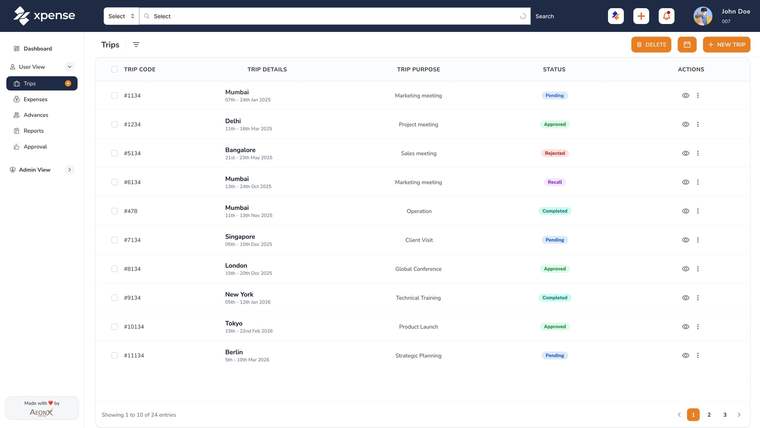
Air travel is usually the largest single line in a travel budget, and the one over which finance has the least say at the moment of purchase. An employee needs to be in Delhi on Thursday. They open a booking site, pick a flight and pay. Finance learns the fare three weeks later, on an expense claim.
By then nothing can be changed. This article is about moving the control to the point where it can still do something: the moment of booking.
Where bookings leak out of policy
It helps to list the ways a booking ends up outside policy. They are ordinary.
- Booked outside the company’s channel. The employee books on a consumer site or through a local agent and claims the fare.
- Booked late. The trip was known for two weeks, the ticket was bought the night before.
- Booked before approval. The ticket is bought, and the trip request follows as a formality.
- Wrong class or fare type. The policy says economy. The ticket is something else.
- Changed after booking. A change or cancellation charge is paid, and nobody sees it as a separate cost.
- Invoice in the wrong name. The tax invoice is issued to the traveller, not the company.
Every one of these is discovered after the fact when the booking and the approval live in different places.
What the travel policy should say about flights
A policy that says “book the lowest fare” is not enough. Travellers need rules they can apply while looking at a list of flights.
- Class of travel by grade, and for which routes or flight lengths a higher class is allowed.
- Booking window. How many days ahead a domestic and an international trip should be booked.
- A fare limit or a rule for comparison. For example, within a set margin of the lowest suitable fare on that route and day.
- Timing rules. How much earlier or later than the preferred time a traveller is expected to accept.
- Who books. The traveller, the travel desk, or either.
- Changes and cancellations. Who approves them and who bears the charge when the change is personal.
- Group and international travel. Any extra approval, and what documents are needed.
Write these as rules a system could check. If a rule cannot be checked, it will not be followed consistently.
Put the request before the booking
The simplest change with the largest effect is the order of steps. The trip request comes first. The booking happens inside it.
- The traveller raises a trip request: purpose, places, dates.
- The traveller searches flights for that request.
- Each option is checked against the travel policy, and the traveller can see which options are within it.
- The traveller chooses. The request, with the chosen flight, goes for approval.
- After approval, the ticket is issued.
- The ticket stays with the trip.
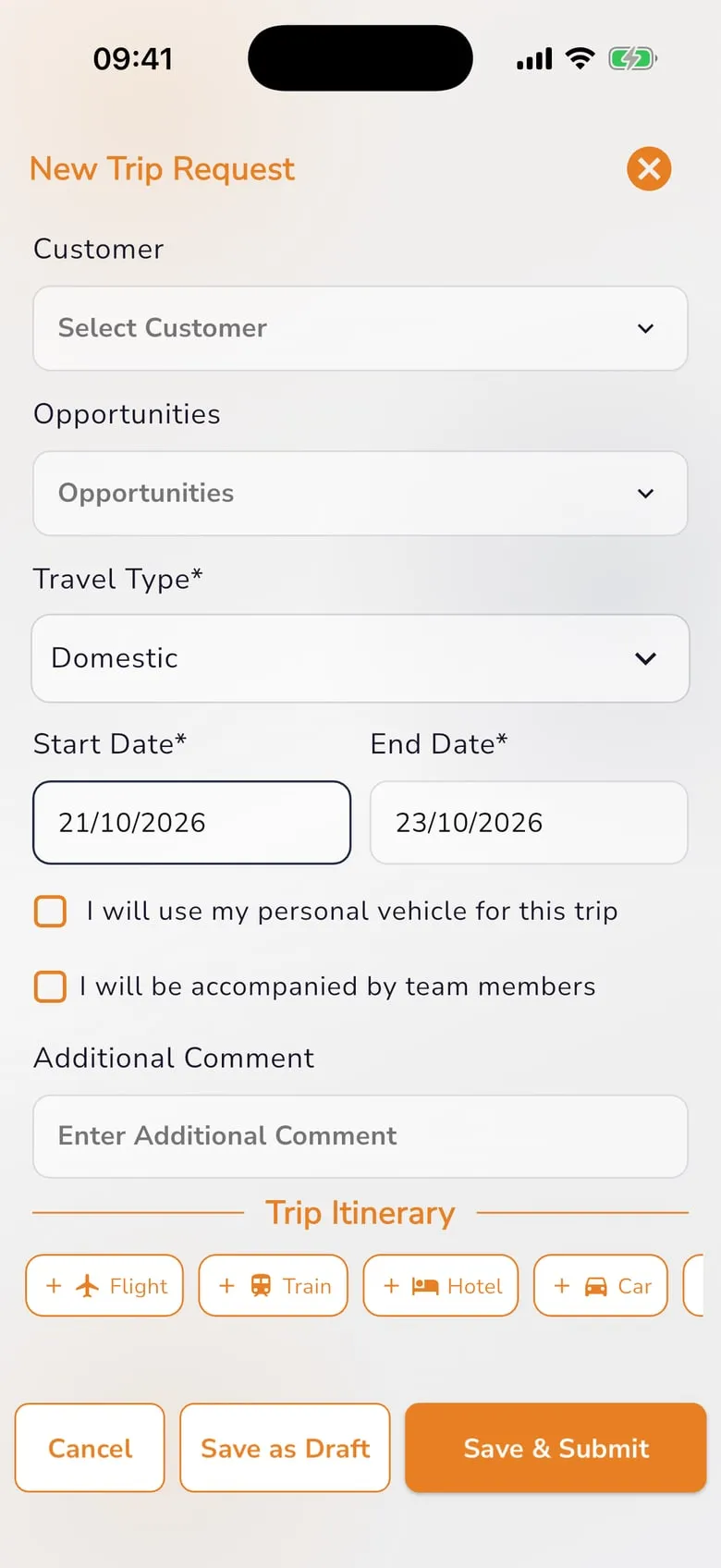
When the steps run in this order, the approver sees the actual fare before the money is spent, and an out-of-policy choice is visible while there is still another choice to make.
Show the traveller the policy while they choose
Travellers do not set out to break policy. They break it because they do not know the limit, or because the in-policy option is not obvious.
A booking screen that marks each fare as within or outside policy does most of the work. The traveller picks an in-policy fare because it is easy. If they need the other one, they say why, and the approver decides with the reason in front of them.
This is better than a rule that blocks the booking. There are good reasons to fly outside policy: a client meeting that moved, a connection that would otherwise be missed. A policy should make exceptions visible. It should not make them impossible.
Approvals that keep pace with fares
Fares change by the hour. An approval that takes three days can cost more than the control is worth. So:
- Keep the path short for trips that are inside policy. One level is often enough.
- Add a level only when the booking is outside policy or above a set value.
- Send the approver the request where they will see it.
- Use delegation, so that a trip does not wait for someone who is travelling.
Changes and cancellations
Plans change. A cancellation should be as controlled as the booking was.
- The traveller should see the charge before confirming.
- The cancellation should be recorded on the same trip.
- The refund should be traceable to the original booking.
If cancellations are handled by phone, the charges will surface as unexplained differences months later.
International and group trips
International trips add documents and usually an extra approval. Trips with several passengers add the question of who is travelling and whether each one is within policy. Handle both in the same flow as a simple trip, so that the record is in one place.
How Xpense handles this
- Trip requests carry your travel policy and city-class limits.
- Flights are searched inside the trip request, with each fare checked against your travel policy.
- The search covers one-way and round-trip, a fare calendar, cabin class and traveller preferences.
- Approval workflows are multi-level, with delegation.
- After approval the ticket is issued and stays on the trip.
- A booking is cancelled from the same screen, with the charges shown before you confirm.
- International trips with several passengers are supported.
To see the flow with your own policy, book a demo and bring a recent trip as the example.
See air ticket booking and corporate travel.